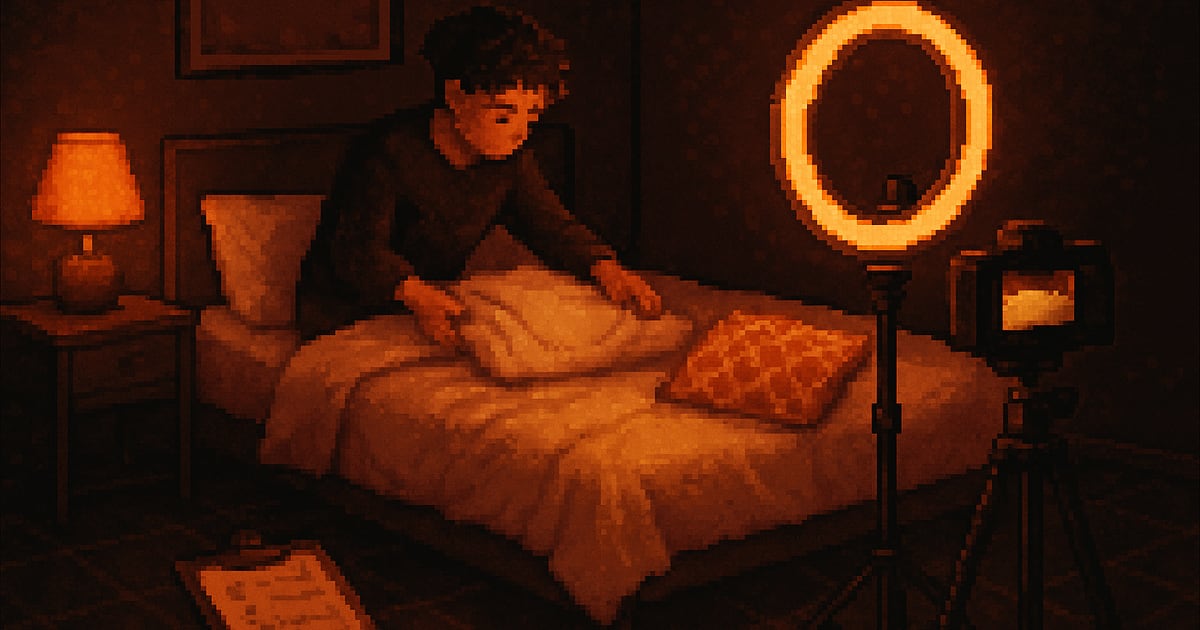
UGC for bedding brands breaks on craft and casting, not on volume. Bedroom footage needs daylight, a made bed, and a creator who has actually slept on the product long enough to say something specific. This piece gives you the casting filter, the shoot list, the claim boundaries, and the review loop that turns seeded product into both ad creative and PDP reviews.
Treat returns as part of creative performance here. Bedding is a considered purchase with a long trial window, so an ad that oversells drape, firmness or cooling does not just underperform. It books revenue you give back later, plus the reverse logistics on a bulky item. The goal is creative that is honest enough to survive the trial period.
Why Bedding Needs Its Own UGC System
Three things make bedding different from the skincare and supplement playbooks most performance teams already run.
First, the product is visually flat. A sheet is a rectangle. Texture, weave and weight are the entire value proposition, and all three are exactly what compresses away in a vertical video at mobile bitrates. Percale versus sateen is a real difference in the hand and almost invisible on camera unless someone films the crumple, the light at a low angle, and the sound. You have to direct for it.
Second, the proof window is long. Mattress and bedding brands publish night-trial guarantees on their own product pages precisely because the decision needs time. A creator who films an unboxing the day the box lands has no credible opinion yet. The usable line is "I have slept on this for a stretch of nights and here is what changed about my mornings," and that requires a seeding calendar, not a same-week turnaround.
Third, the claims are regulated by your own paperwork. Cooling, bamboo, organic and thread count are not creative decisions. They belong to the certification and testing your brand holds, and a creator improvising "this is organic bamboo, it literally cools you down" creates a compliance problem in an ad account you control. The FTC's endorsement rules also apply to seeded product, so gifted content needs clear disclosure.
The gap shows up in the brief. A one-line brief that says "show the sheets on your bed" comes back as a made bed plus a voiceover about softness, and nothing in it separates you from the brands bidding beside you. A shot list that requires a crumple-and-release close-up, a morning light shot at a consistent angle, and a line about why the creator switched from sateen gives you hooks you can test against each other, because each video makes a different, specific argument.
Casting Creators Who Can Actually Film a Bedroom
Your casting filter for bedding is not follower count or even portfolio polish. It is room, light, and sleep context.
It is worth asking every applicant for the following before you ship anything:
- A short unedited clip of their bedroom, filmed in the morning, no filter, phone held at the foot of the bed. You are checking window direction, wall colour, clutter, and whether the bed frame fits your brand's visual world.
- A photo of the bed stripped to the mattress. Pocket depth matters. A fitted sheet built for a deep mattress can drape badly on a thin foam slab sitting on a platform.
- Their sleep context in one sentence: solo or partnered, pets on the bed, hot sleeper or cold sleeper, current sheet material. This becomes the casting matrix later when you want a hot-sleeper angle and a partnered-couple angle in the same batch.
- Confirmation they can film across multiple days, including a night shot and a morning shot.
That last request thins the list, and it should. Night routine and morning wake-up footage shot in the same sitting looks fake because the light gives it away.
Build the batch as a matrix, not a pile. For a cooling sheet launch, a sensible spread covers hot sleepers in warm climates, a partnered pair where one runs hot, a dark-walled bedroom for contrast, a bright minimal room, and a parent filming the kid-bed version if you sell that size. You are casting arguments, not faces.
On sourcing: pull first from your own customer list, because people who already bought and kept the product through the trial window give you the most credible footage. Beyond that, platforms where creators pitch brands directly are a useful channel, and UGC Roster works on that model, with creators sending pitches to brands rather than waiting for a brief to land. Round out the batch with manual outreach to creators whose existing bedroom footage already looks like your brand.
Pay properly and write rates down before you ship. Bedding shoots are multi-day and involve washing, remaking and reshooting, so single-video rates built for a supplement unboxing do not fit. Use the UGC rate calculator to set a defensible per-batch number, and decide up front whether you are buying organic posting rights, paid usage, or whitelisting on the creator's handle. Whitelisting is worth the premium for bedding because a real bedroom account carries more credibility in-feed than a brand handle showing the same bed.
The Bedding Brief and Shoot List That Produces Usable Footage
A bedding brief needs a shot list, a claims sheet, and a timeline. Build the structure in the UGC brief generator, then layer the category specifics below.
The timeline is the part most briefs skip. A sequence worth recommending:
- Unboxing and first-touch footage, before washing.
- First wash and the out-of-dryer shot. Shrinkage and softening are what buyers actually ask about.
- A stretch of nights simply sleeping on it, with no filming required.
- Night routine, morning wake, and the opinion piece, filmed once there is real time on product.
- A later wash, a pilling check, and an honest verdict.
The shot list, written as separate asks so you get coverage rather than one long monologue:
- Hooks spoken to camera, each with a different first line: a problem hook, a switch hook, a skeptic hook.
- Crumple and release close-up, filmed with side light, with audio on. The sound of percale is a selling point.
- Bed-making sequence, including the corner tuck on the fitted sheet so pocket depth reads.
- Night routine: lamp on, phone down, getting into bed. Keep it short and real.
- Morning wake: same camera angle as the night shot, daylight, no makeup reset. The continuity is the proof.
- Colour comparison: the same swatch filmed in daylight and under a warm lamp. This is the shot that heads off colour-expectation complaints.
- Post-wash texture shot, filmed later in the window.
- Verdict piece to camera, unscripted beyond the prompts you supply.
For cooling products, direct the demo rather than the claim. A creator can film themselves kicking the duvet off in the middle of the night on their old sheets, then the same hour on yours, and say "I am a hot sleeper and I stopped waking up." That is a personal account. "This lowers your body temperature" is a product claim you have to own and substantiate, and it does not belong in a creator script unless your legal team wrote the sentence.
Give every creator a one-page claims sheet with three columns: approved phrases, personal-experience phrases, and banned phrases. Approved phrases are verbatim lines tied to your certifications and test results, including the exact certification name and how it may be worded. Personal-experience phrases are first-person and hedged to their own experience. Banned phrases cover anything medical, anything about sleep disorders, and any certification your product does not hold. Enforce it at approval, not after the ad is live.
One more brief line that pays for itself: require the highest resolution the creator's phone supports, and ban ceiling lights entirely. A lamp plus a window beats an overhead bulb every time for fabric.
Turning Seeded Product Into Reviews and Repeat Purchases
The seeded unit should produce three assets, not one: ad footage, a PDP review with photos, and a reason for the creator to come back for the duvet cover.
Sequence it. When the creator files footage, send the review request in the same message with a direct link and a prompt list: what you switched from, how it washed, what surprised you. Reviews written against prompts carry more detail, and detailed reviews are what a considered buyer actually reads. Later in the window, ask for the photo review with the bed in daylight.
Push the same footage into retention surfaces, not just prospecting. The out-of-dryer clip belongs in the post-purchase care email. The post-wash pilling check belongs in the win-back flow for customers who bought one set and never came back. A practical pattern for sheet brands is covered in more detail in the guide on replenishment and subscription creative for sheet brands, and the mechanics of harvesting content after delivery are in post-purchase creator content for bedding.
The loop only closes if the second ask is built in from the start. Once a creator has lived with the sheets, offer the matching pillowcases or duvet cover at a creator rate. The ones who accept can film the full bed dressed, which is the composition the bundle page needs and the hardest thing to stage in studio with convincing wrinkles. The ones who decline usually tell you why, and those reasons are brief material for the next round.
Honest creative is the retention lever here. If the ad shows crisp hotel-style percale and the buyer expected buttery sateen, you get a return on a heavy item plus a bad review. The framework for building pre-purchase creative that sets expectations is in cutting mattress return rates with pre-purchase creative, and it applies to sheets and duvets with minor changes.
Testing, Reviewing Footage, and Deciding What to Reorder
Intake first. Score every batch before it touches the ad account, on five binary checks: daylight present, audio clean, bed made, product in focus for at least one close-up, no unapproved claims spoken. Anything that fails two checks goes back for a reshoot while the creator still has the product. Reshoots after the creator has moved on are not reshoots, they are losses.
Then tag the library by attribute, not by creator name. Tag each clip with room type (bright, dark, minimal, maximal), sleeper type, format (routine, demo, verdict, texture macro), and hook category. When a concept wins you need to know what won, and "Jess's video" is not an answer you can brief against.
Test structure for a bedding batch:
- One concept per ad set, three hook variants inside it, offer held constant.
- Run prospecting only for the read. Retargeting contaminates the signal because the audience already saw the texture close-up.
- Judge on hook rate and cost per add to cart first, then let the winners run long enough to read cost per purchase. Bedding has a slower decision cycle than consumables, so do not kill a concept on a two-day CPA read.
- Pull returns data by creative where your attribution allows it. A creative with a strong CPA and an elevated return rate is a net loss, and that signal arrives on a lag.
Reorder rules that keep the library fresh without restarting casting every quarter: reorder from any creator whose footage produced a concept that kept running, and brief them for variation rather than repetition. Same creator, same bedroom, new argument. The room continuity actually helps, because repeat viewers start recognising the space.
Budget the next batch off the last one rather than off a flat monthly number. Work out your cost per usable clip, not cost per video, and run the arithmetic in the UGC budget calculator before you commit the quarter. Footage that fails intake still costs you the product, the shipping and the fee.
Review the library on a schedule and look for the shot every surviving concept shares. If it turns out to be a daylight texture macro early in the video, make that shot mandatory in every future brief and drop the requirements creators keep failing, like a night routine filmed without decent lamp light. Briefs that ask for fewer, better shots are easier to pass at intake.
Common mistakes
Filming the day the box arrives. Creators do this because the unboxing is the easiest content to make and they want to close the job fast. The result is an opinion with no basis, and viewers hear it. Build the mid-window and post-wash checkpoints into the contract and schedule payment against the final delivery, not the unboxing.
Shooting under a ceiling light. Overhead bulbs flatten weave and push white sheets grey or yellow. Creators default to it because it is the switch by the door. Ban it in the brief, specify window light plus one lamp, and ask for the morning shot inside a stated time window.
Improvising material claims. A creator says "it is basically bamboo, so it breathes" because it sounds like a helpful detail. It is a claim your brand now owns in a paid ad. Supply the verbatim approved lines and the banned list, and reject takes that stray, even good ones.
Hiding the mess. Creators stage a hotel-perfect bed because they think that is what the brand wants. Buyers do not sleep in hotels, and a too-perfect bed reads as a stock photo. Ask for one deliberately lived-in shot: morning creases, a pet at the foot of the bed, a duvet half pulled back.
Skipping the wash cycle. Nobody films laundry because it is boring, but shrinkage, pilling and softening are the top questions in bedding reviews. Make the out-of-dryer shot a required deliverable and give the creator a prompt: did it shrink, did it soften, did it wrinkle more or less than expected.
One camera angle for everything. Creators park the phone on a dresser and talk. You end up with no cutaways and no way to edit. List the b-roll shots individually in the brief, so the editor has material to cut against the voiceover.
Overselling cooling. Creators know cooling is the selling point and push it, because they think that is what gets reordered. Overselling it sets up a return inside the trial window. Reward the honest version instead: "I run hot, this helped, it is not air conditioning" is the version a skeptical buyer believes.
Next steps
Do the casting audition first. Before you ship a single unit, send your current creator shortlist the screening request: morning bedroom clip, stripped mattress photo, sleep context sentence, multi-day availability confirmation. You will cut a meaningful part of the list and save the shipping cost on every unit you would have written off.
Then build one brief, not five. Take the timeline and the shot list above, drop them into the UGC brief generator, add your claims sheet with the exact certification wording your brand holds, and run a single batch against it. Set rates with the UGC rate calculator and decide the whitelisting question before you send contracts, because retrofitting paid usage rights after a video performs is the most expensive mistake in this workflow.
While that batch is sleeping on the product, fix your intake. Write the five binary checks into a shared sheet, decide who scores the footage, and agree the reshoot trigger. A short scoring step is what stops a library of unusable clips.
If you want the overview of how sourcing, briefs and approvals fit together for this category, start with the bedding brand overview, then book a demo or post a brand brief to get your next batch cast against the matrix rather than the follower count.
FAQ
What is bedding UGC, exactly?
Bedding UGC is creator-filmed footage of sheets, duvets, pillows or mattress toppers shot in a real bedroom after the creator has actually slept on the product, then licensed for ads, PDP modules and review sections. It is not a studio flat lay and it is not an unboxing filmed the day the box lands. The distinguishing feature is time on product. A creator who has slept on your percale can say whether pilling started and whether the colour held through washing. A creator filming a shipping box can only say it arrived.
How do you brief UGC creators for bedding and sleep ads?
Send four things before the product ships: an approved claims list, a banned phrase list, a shot list with required angles, and a filming window tied to the number of nights slept. Then ask for one specific personal detail you cannot script, like what changed about the first minutes after the alarm. A useful structure is: film the shot list once the creator has real nights on the product, record voiceover separately after. Separating audio from footage means you can recut hooks later without reshooting. Keep the brief to one page. Long briefs get skimmed, and the shots you buried at the bottom are the ones that come back missing.
What should a bedding UGC shoot list include?
Beyond the texture close-up, require these: the fitted sheet going over a deep mattress corner, the first-wash wrinkle state, a bedside point of view as if the viewer is lying down, a colour reference against a white wall or a known object, and the pillowcase closure. Add a wide shot of the whole made bed from standing height, because that is the composition shoppers imagine in their own room. Ask for audio on the fabric handling. Percale rustles, sateen does not, and that sound carries a texture difference the compressed video cannot. Specify landscape coverage too if you run Meta placements beyond Reels.
How do you find UGC creators who can film a bedroom properly?
Cast on room and light before you cast on follower count. Ask in the application: does your bedroom have a window, which direction does it face, and can you send one unedited daylight clip shot in that room. That last request filters harder than any portfolio, because polished reels hide what a creator can do without a ring light. A creator with a north-facing window and soft all-day light beats a bigger account filming at night in a rented room with a blackout blind. On UGC Roster, brands source vetted UGC creators for ad creative, including creators who pitch in rather than waiting on a brief.
Do you send bedding creators the product to keep?
Yes, assume the product is gifted and non-returnable. Slept-on bedding cannot be resold, so a return clause only creates friction and gives you nothing back. Price that into your cost per asset from the start: product cost plus creator fee plus shipping on a bulky box. Because the product is gifted, the FTC's endorsement rules apply, so the creator needs a clear disclosure in the post itself, not buried in a bio. Put the keep terms, the usage rights, the licensing length and the whitelisting permission in the contract before the box ships. Chasing paid media rights after a video performs costs more.
What cooling claims can a creator make about sheets on camera?
Only what your own testing and certifications support, phrased as personal experience rather than performance fact. A creator saying "I used to kick the duvet off in the middle of the night and I have not done that this month" is describing their experience. A creator saying "these drop your body temperature" is making a product performance claim your brand has to substantiate, in an ad account you own. Same with "organic" and "bamboo": those map to specific certifications and fiber processing, not vibes. Give creators the exact approved sentences and the exact banned ones. Then review the voiceover before the video is edited, not after.
How do you reduce mattress and bedding returns with better creative?
Show the trade-offs on camera instead of hiding them. Linen wrinkles, percale takes time to break in, and a topper on a deep mattress eats pocket depth. Creative that names those things up front sets the expectation the trial period will test. One approach worth running: a hook built on the flaw, like "these wrinkle and that is the point," then the texture payoff. You also need measurement. Tag orders by the creative that drove them, then read return rate by ad, not just ROAS, so a creative that looks strong on the front end gets judged on what it keeps.