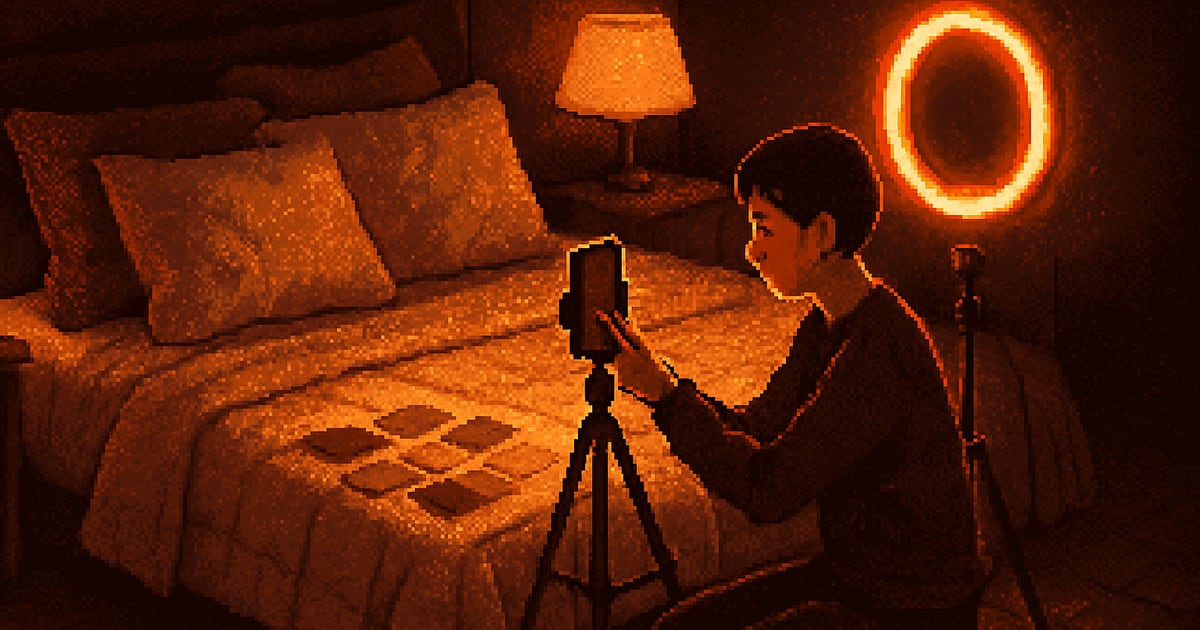
This teardown reads Brooklinen's public site as if it were an ad brief, because for a considered purchase like bedding, the site is where the angles get decided. To be clear about what is knowable: nobody outside the company can see their ad account, their spend, or their return on ad spend. So this is not a claim about what Brooklinen UGC ads deliver. It is a read of the merchandising, proof, and offer structure the brand publishes, plus the creator-video playbook that fits that structure in your account.
What you get out of this: bedding-specific creator formats, a shot list your creators can execute in a real bedroom, claim boundaries that keep legal off your back, and a test plan that treats returns as a creative metric instead of a CX problem.
Why Brooklinen UGC Ads Are Worth Tearing Down
Bedding is a category where the product is invisible in a static image. Cotton looks like cotton on a screen. What separates a cheap sheet set from a premium one is texture, drape, and weight, plus how it feels on the first night versus after repeated washes. None of that survives a flat lay. That is exactly the gap creator video fills.
Brooklinen is useful as a teardown subject because the site publishes what performance creative needs: a clear product taxonomy and visible customer proof. The homepage sorts sheets into cool, crisp Classic Percale and soft, smooth Luxe, which is a fabric-choice decision presented to the shopper up front. It also leads with short first-name testimonials such as "Literally the best sleep I've gotten in ages."
That combination matters for your media plan. A considered purchase at this basket size means the buyer is not deciding in one session. They research, read reviews, check colors, and come back. Creative has to work at the top (stop the scroll with texture and a real bedroom) and at the bottom (kill the objection that this is just expensive cotton).
Offer mechanics are creative, not just discounting. When a bedding brand runs a coded bundle promotion with a stated deadline, that gives creators a reason to say something specific ("I got everything but the mattress in one order"). It also gives you a clean reason to refresh hooks on a calendar.
For a comparison of how another bedding brand handles entry-level positioning differently, see Quince Bedding: How Entry Price Points Win the Scroll.
What the Site Tells You About the Ad Angles
Treat the navigation and homepage modules as a pre-sorted angle list. Every merchandising block on a mature DTC site is a hypothesis somebody already validated on-site. Your job is to port it to video.
Here is how the published Brooklinen modules translate into creator-video angles. The percale versus Luxe split becomes a comparison script: two beds, two fabrics, one creator explaining who each one is for. The site's Cooling Shop merchandising becomes a hot-sleeper angle, which in your account should be scripted as a personal-experience story, not a temperature claim. Bed bundles marketed as getting everything but the mattress become a room-refresh format with a before and after. The bath side, including waffle textiles and bath bundles, becomes an adjacent-category upsell you can test as its own ad set rather than a tacked-on mention.
Color is its own angle. The site groups core colors into whites, blues, neutrals, and patterns. For creative, that is a returns-prevention brief: shoot the same set in daylight and in lamplight so the shopper knows what they are getting. Color surprise is a quiet driver of bedding returns, and it is solvable with a shot, not a policy change.
The proof blocks translate too. Short first-name testimonials on the homepage map directly to a review-read ad format, where a creator pulls a specific objection out of a review and answers it on camera. Whatever returns or guarantee window your own brand publishes becomes the closer line at the end of a demo, because a generous window is the strongest response to "what if I hate them."
If you are building this for your own brand, run the same exercise on your site before you write a script: list every merchandising module, write the angle it implies, then rank by how hard it is to show on camera. The ones that are hardest to fake are usually your best performers.
The Creator Video Formats That Fit Bedding
These are the formats that tend to carry a bedding account. Brief them as distinct concepts, not as variations of one script.
First-Night Unboxing With a Texture Close-Up
Open on the box, then cut to the fabric fast. The whole point is the tactile moment: a thumb dragging across percale, the crackle of a crisp sheet being shaken out. Hook options: "I finally replaced the sheets I've had since college," or "Here's what premium sheets actually feel like." Keep it short enough to hold attention.
Wash-Test Proof Over Time
The strongest bedding format and the least produced, because it needs two shoots. Day one footage, then a second shoot after several washes, cut side by side. Creators need to be paid for the callback, so build it into the rate up front. Use the UGC rate calculator to price a two-session deliverable instead of guessing.
Hot-Sleeper Night Routine
A real routine, filmed at night with lamp light, ending with the creator's own account of how the night went. Boundaries below, but the format is durable because it looks like content rather than an ad.
Fabric Comparison
Two fabric types, same bed, same light. The creator plays sorting hat: "If you run hot, this one. If you want that soft, broken-in feel, this one." Comparison scripts move the shopper from "should I buy" to "which one."
Room Refresh Transformation
Messy, mismatched bedroom in the first frame, styled bed in the last. This is the bundle ad. It justifies a higher basket because the value story is the whole bed, not one item.
Objection-Answer Review Read
The creator reads a real review objection on screen and answers it from their own use. "Everyone says these wrinkle. Here's mine after a night's sleep, unironed." Showing the flaw honestly is what makes the rest believable.
On cost, creator video is a different line item from studio production. As public reference points, soona lists $149 per studio booking for non-members, $39 per photo, and $93 per video clip (verified 2026-08-22), while Influee lists creator rates of $22 to $67 per video (verified 2026-08-22). Fully managed micro-influencer projects sit higher: minisocial states projects start at $3,000 for 10 creators (verified 2026-08-22). Pick the model that matches your testing cadence, not the one with the lowest sticker price.
For a side-by-side of what creator-produced content costs versus agency production, see UGC Creators vs Agency Ad Content: Real Cost Breakdown.
Briefing Creators to Shoot a Bedroom Properly
Most bad bedding UGC is a lighting and staging failure, not a talent failure. Fix it in the brief.
Here is what I would recommend writing into a bedding brief:
- Shoot in daylight from a window. Overhead warm LEDs turn white sheets yellow and grey sheets brown.
- Include a lamp-light shot of the same color so the shopper sees both states.
- Set white balance manually or lock exposure. An auto-exposing phone panning across a white duvet will pulse.
- Shoot the bed partly unmade. A hotel-perfect bed reads as stock footage and kills the credibility that makes UGC work.
- Capture macro shots: weave texture, stitching or hem detail, the pillow being squeezed, the sheet falling in drape.
- Record audio in the room, not in a car or bathroom. Bedding scripts are soft-spoken, so a lav or earbuds mic matters.
- Film vertical with headroom at the top and bottom for platform safe zones, plus a separate pass sized for feed placements if you plan to run them.
- No ironing between takes. Show wrinkles.
Claim boundaries belong in the brief too, in plain language the creator can follow. Creators may describe their own experience ("I woke up less sweaty"). They may not make medical or health claims about sleep, and they may not state a certification, fiber origin, or cooling performance level that is not on your own product page. If your cooling story rests on a lab test or a certification, the exact wording comes from you, and the creator quotes it verbatim or skips it. Build this into a standard document with the UGC brief generator so legal reviews the template once instead of every script.
For a deeper look at how briefs are structured from the brand side, see How UGC Briefs Work for Brands (And How to Read One).
Sourcing is the other half. Casting from your customer list works for authenticity but is slow, and cold outreach to creators who have never pitched a brand tends to go quiet. Creators on UGC Roster actively pitch brands, so the ones who reach you have already self-selected for motivation and fit. Whichever channel you use, filter on one thing first: does their existing content show a real bedroom with usable natural light. A creator who films everything in a dim apartment corner cannot shoot this category, regardless of follower count.
Settle usage and whitelisting in the contract, not after the edit. If you intend to run the asset as a partnership ad from the creator's handle, you need the ad-code permission and a usage term stated in months. Retroactive permission requests stall launches.
For a broader look at how bedding brands structure their creator programs from scratch, see Bedding Brand Creator Program: The Founder's Playbook.
Building a Testing Plan Around Bundles and Proof
Structure the test around angles, then hooks, then formats. Angles are the expensive variable to get wrong, so test distinct angles before you spend a cycle on hook variants.
A workable cadence for a bedding account: brief each angle as its own concept (fabric comparison, hot-sleeper routine, bundle refresh), commission a creator per angle, cut alternate hooks from each asset, and launch them into a single testing campaign with broad targeting. Read hook rate and hold rate first, because at low spend they stabilize before purchase data does. Retire the weakest hooks early and move budget to the survivors.
Bundle creative deserves its own ad set. A bundle ad sells a higher basket, so it needs a different proof stack: the full bed shown assembled, the item list on screen, and the price logic spoken out loud. Brooklinen's own bundle merchandising frames it as getting everything but the mattress, which is a useful line of argument. It reframes the purchase as completing a room rather than buying sheets.
Tie a deadline to promo creative. When your offer has a stated expiry, you get a legitimate reason to swap hooks mid-flight instead of running fake urgency.
The metric most bedding teams under-instrument is net contribution after returns, by creative. Pull returns by order, match back to the creative ID on the first click or the last view, and look at which ads bring back buyers who keep the product. Honest creative, the kind that shows wrinkles, real color, and actual weight, tends to set expectations the product can meet. Over-styled creative sells the first order and loses it on the return. When you plan spend against a test roster, model it with the UGC content budget calculator so creator fees, usage, and reshoots sit in the same sheet as media.
For a practical guide on how many assets a bedding account needs to keep testing cadence healthy, see How Many Ad Creatives Does a Bedding Brand Need Monthly?.
One more lever: run the winning organic-style asset as a partnership ad from the creator handle and as a brand-handle ad in parallel. Same creative, different sender. In a considered category, the social-proof frame of a real account often changes how the comments section behaves, and the comments are part of the ad.
Common Mistakes
Shooting a hotel-perfect bed. Creators do this because it feels professional and because they think mess looks sloppy. It reads as stock footage, which is the one thing UGC is supposed to avoid. Fix: pull one corner back, leave a pillow dented, film someone actually getting into bed.
Filming under warm overhead light at night only. It is convenient and it destroys color accuracy, which drives returns when the shopper receives a grey sheet they thought was white. Fix: ask for a daylight pass near a window plus a lamp-light pass, and reject deliverables that only have the second.
Making health or sleep-quality claims. Creators reach for it because "I slept better" is the most natural thing to say about bedding. It moves the ad into medical claim territory and it is unverifiable. Fix: script personal sensory language (cooler to the touch, lighter weight) and keep any performance or certification wording in the brand-supplied lines.
Skipping macro texture shots. Creators shoot wide because wide is easy and looks tidy. Wide shots communicate nothing about a product whose entire premium is tactile. Fix: require close-ups, including weave and drape, and check for them before approval.
Leading the hook with the brand name. It happens when a creator treats the brief as a sponsorship read instead of an ad. Nobody stops scrolling for a brand name. Fix: open on the problem or the object ("These are the sheets that finally fixed my 3am overheating") and land the brand early, not first.
Delivering one long take with no b-roll. Creators do it to save time, and it leaves you with no editing options when the hook underperforms. Fix: specify a deliverable structure of one talking piece plus a set of b-roll clips, so your editor can build hook variants from one shoot.
Ignoring the durability question entirely. It is a core objection on premium bedding and the hardest to shoot, so creators skip it. Fix: pay for the second session and cut day-one against post-wash footage. That asset tends to have a long shelf life because competitors cannot copy it without waiting out the washes.
Next Steps
Do this first: open your own site, list every merchandising module, and write the video angle each one implies. The exercise is quick, and it will give you more usable concepts than another round of competitor ad-library scrolling.
Then build one standard bedding brief with the lighting rules, the b-roll list, and the claim boundaries written out, using the UGC brief generator. Price a two-session wash-test deliverable with the UGC rate calculator before you negotiate, and run your quarter through the budget calculator so creator fees and media sit side by side. Spread casting across angles instead of stacking every creator on one.
When the first batch is live, instrument returns by creative ID. That single report will change which angles you scale faster than any hook test will.
If you want a shortcut on casting, read the bedding and sleep brand overview, then post a brand brief so creators who shoot bedrooms in real daylight can come to you.
FAQ
What is UGC in bedding and sleep ads?
UGC in bedding ads is creator-shot footage of your sheets, duvets, or towels filmed in a real home and licensed by you to run as paid media. It is not organic seeding, and it is not a studio shoot with better lighting. The defining trait is a first-person point of view: one person, one bedroom, one honest reaction to texture and weight. A typical asset is a creator pulling a percale set out of the dryer and showing how it wrinkles, which answers a question your product page cannot. You own the usage rights, so it runs as an ad, not a post.
How do you brief UGC creators for bedding and sleep ads?
Brief the angle, not the shot list, then attach the shot list underneath. Start with one job per video: fabric choice, wash durability, hot-sleeper objection, or gifting. Give the creator the brand's own vocabulary so claims stay inside your legal lines. Brooklinen, for example, splits its sheets into cool and crisp Classic Percale versus soft and smooth Luxe on its homepage, which is exactly the kind of fabric language you hand a creator verbatim. Then specify the unscripted part: no reading, no ring light, film at the hour they actually make the bed. Ask for alternate hooks in the same take so you can test openings without a reshoot.
What should a bedding UGC shoot list include?
Ask for texture, motion, and time, because those are the things a flat lay cannot fake. Concretely: a close macro of the weave with the creator's hand dragging across it, a duvet shake so the camera sees drape and fill, a corner-tuck on a deep mattress, a face-level reaction on first contact, and a post-wash shot filmed on a separate day. Add a wide establishing frame of the bedroom so the ad reads as a real room, not a set. One practical rule: require the creator to film the dryer unload, because wrinkle behavior is hard to judge from a product page.
How much does UGC cost for a bedding brand?
Budget in three buckets: creator fee, product cost, and usage rights. Bedding is expensive to seed, so your true cost per asset is higher than in skincare or supplements, and a sheet-plus-duvet bundle can dwarf the shoot fee. Creator fees vary by deliverable count, exclusivity window, and whether you want whitelisting, so treat any single per-video number you see as a starting point rather than a rate card. On the tooling side, UGC Roster brand plans start at Launch, $379 per month, or $299 per month billed annually, with Growth and Scale above that, and creators pay $29 per month on the creator side. Model licensing renewals before you scale spend.
Do you send bedding creators the product to keep?
Yes, and stop treating it as a perk. Sheets cannot be returned once slept in, so gifted product is effectively consumed the moment the shoot starts. Send the full sleep system, not a single pillowcase: fitted sheet, flat sheet, pillowcases, and ideally the duvet cover, because the shake-and-drape shot needs the cover. Say in the contract that the product is theirs, that it counts as compensation, and that they should talk to their accountant about the tax side. One useful habit: send two colorways to your best performers so you get a color-choice video and a wash-test video from one shipment.
What cooling claims can a creator make about sheets on camera?
Let them describe their own experience, never a mechanism or a medical outcome. "I stopped waking up sweaty" is a personal report. "These lower your body temperature" is a product performance claim you now have to substantiate. Ban words like clinically proven, thermoregulating, and doctor recommended unless you hold the testing. Your brief is the liability control, so write the boundaries into it. Safer route: hand creators the language your own site already uses, the way Brooklinen describes Classic Percale as cool and crisp, and require an on-screen disclosure that the post is an ad.
Which UGC formats sell mattresses and bedding best?
Formats that compress time or force a comparison. The wash-test update, filmed weeks apart in one video, answers durability better than any claim line. The hotel comparison reframes price by benchmarking against something the viewer already paid for. The switcher confession, where a creator explains what annoyed them about their last set, works because it names the objection out loud. Add the guest-room reset for gifting season and the deep-mattress fit demo for anyone with a topper. Skip the silent aesthetic pan. It looks like every other bedding ad in the feed, and it gives the algorithm nothing distinct to optimize against.
Sources
- soona pricing references, https://soona.co (verified 2026-08-22)
- Influee creator rate references, https://influee.co (verified 2026-08-22)
- minisocial project pricing, https://www.minisocial.com (verified 2026-08-22)
Related Reading
- UGC Brief Generator
- UGC Rate Calculator
- UGC Budget Calculator
- Content Mastery (free UGC course track)
- How Parachute Home builds creative for bedding ads