That is why Coop Home Goods UGC is worth studying as a creative system rather than as a style. The brand, which now trades as Coop Sleep Goods on the same coophomegoods.com domain (verified October 2026), sells pillows whose loft and firmness can be adjusted by the sleeper, and that single mechanical fact gives creators a visible action to perform on camera. Most bedding brands have no equivalent beat.
Below is a teardown of what the site structure tells a creative team, how to turn adjustability into a repeatable demo format, how to build a sleeper-type angle matrix for Meta and TikTok, and how to brief and test without stacking up returns from people who bought the wrong shape.
Why pillows are a UGC category, not a studio category
A studio can make a pillow look expensive. It cannot make a pillow look like it solves your problem. The purchase decision happens when a viewer recognizes their own sleeping position, their own 2am neck adjustment, their own habit of folding a pillow in half because it is too flat. None of that survives a lit product shot on seamless paper.
Coop's own site leans into that recognition. The homepage routes shoppers by sleep type, with separate entry points for hot sleepers, back-to-side sleepers and side sleepers, and a shape guide covering Classic, Crescent and Cut-Out profiles (coophomegoods.com). That is a fit problem presented at the navigation level. Fit problems are solved by demonstration, and demonstration is cheaper and more believable when filmed in a real bedroom by someone who sleeps the way the viewer sleeps.
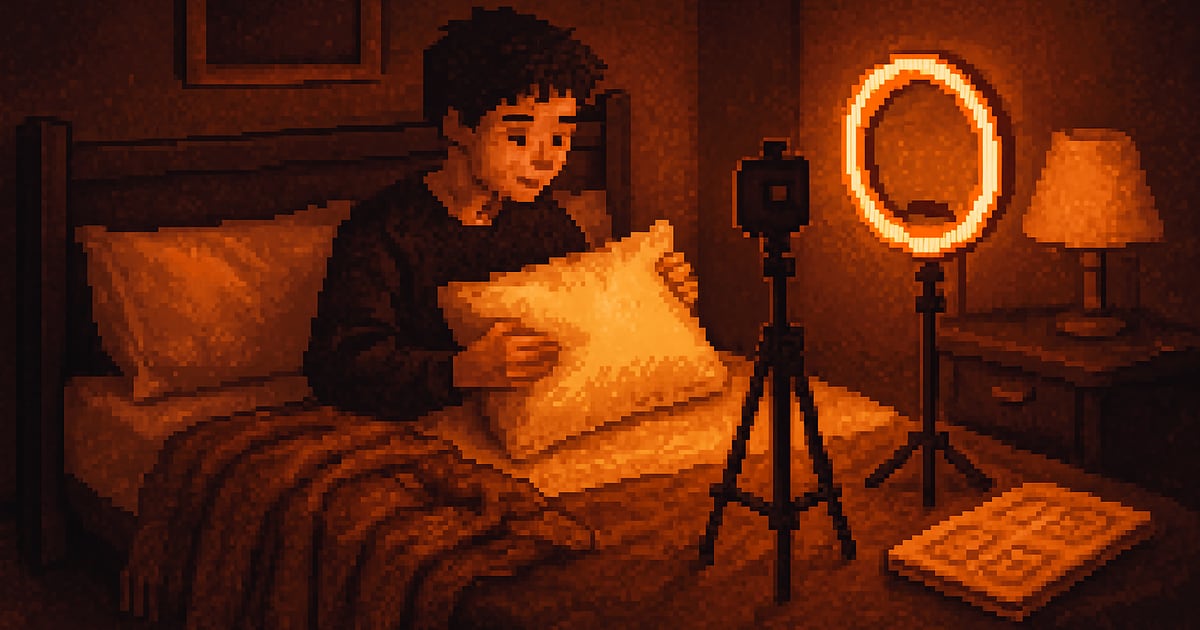
Here is the concrete version. A pillow brand running Meta prospecting had one hero static of a styled bed and three lifestyle clips of models smiling at pillows. The team reshot the top performer as a handheld piece: the creator sits on the edge of her own unmade bed, unzips the pillow cover, pulls out two handfuls of fill, re-zips, and lies down side-on to a locked-off phone. No voiceover beyond what she says naturally. The asset stopped being a bed photo and started being an instruction manual, and the comments shifted from compliments on the room to questions about shape and size. That is the signal you want before you scale spend.
The economics follow the same logic. A studio day gets you polished frames you cannot iterate on. A roster of creators gets you variants. Price your variants properly before you commit with the UGC rate calculator, because pillow demos need repeat shooters, not one-off hires.
What the Coop Sleep Goods site signals to creative teams
Read a DTC site as a brief. Every merchandising decision tells you what the brand believes the objection is.
First signal: the catalog is segmented by both pillow type and pillow shape, with Original, Eden, Cool+, Latex and Copper+ lines and Classic, Crescent and Cut-Out shapes listed in the navigation (coophomegoods.com). Segmentation that deep means the brand expects shoppers to get lost. Creative that does not pre-qualify the viewer by sleeping position sends traffic into a decision tree it cannot finish.
Second signal: the site runs both a Sleep Quiz and a Pillow Quiz as primary calls to action (coophomegoods.com). Quizzes exist where self-selection fails. For paid social, that means your landing experience can absorb an uncertain buyer, but your ad should still narrow the audience before the click.
Third signal: price points are stated openly, with the Original Adjustable Pillow listed from $89, the Eden from $109, the Orthopedic from $139 and the Cool+ from $149 at the time of our October 2026 check (coophomegoods.com). That is well above a commodity pillow. High-consideration pricing means your creative has to justify the spread, not hide it.
Fourth signal: the trust furniture is everywhere. The Original Adjustable Pillow carries a Consumer Reports Recommended badge with 17,669 reviews at 4.7 out of 5 on the product card, the site promotes a 100-Night Sleep Better Guarantee across products, and the footer links to a SleepScore Labs Validated page and an affiliate program (coophomegoods.com). A brand that repeats proof at that density is telling you the category default is disbelief.
Fifth signal, and the one most teams miss: many Coop products are flagged HSA/FSA eligible, with a dedicated eligibility page (coophomegoods.com). That is a payment-method unlock for a specific audience and a completely separate creative angle from comfort.
Turning adjustability into a hero demo creators can film
Adjustability is the only pillow feature that reads on video without narration. Coop's product pages describe loft and firmness adjustment on the adjustable pillow line (coophomegoods.com), so the brief writes itself: show the change, in one take, from a fixed camera.
The shoot setup that makes this work:
- Phone on a tripod or a stack of books, lens level with the mattress surface, framed side-on so the pillow silhouette is clearly visible against a plain wall.
- Same bedding, same curtains, same lamp for both halves of the demo. If the lighting shifts, the loft change stops being readable.
- One continuous take for the adjustment itself. Cutting mid-adjustment reads as a trick.
- A second angle, over-the-shoulder, for the hands-in-the-fill moment. That is the texture shot.
- A hard surface nearby (a bowl, a tray, a zip bag) so removed fill stays in frame rather than disappearing off camera.
The six-beat script that creators should hit:
- Recognition hook, spoken while lying down: "I'm a side sleeper and every pillow I buy is too flat by week three."
- Problem shot: head sinking, shoulder compressed, two seconds, no talking.
- Reveal: unzip the cover, show the fill.
- The action: remove or add fill on camera, say exactly how much in plain terms ("about two handfuls").
- Result shot: same camera position, lie back down, hold for three full seconds so the silhouette registers.
- Qualifier close: who this is for and who it is not for, then the offer.
Beat six is where bedding brands lose money. A long trial window means an over-promised ad becomes a return ninety days later. Make the creator name the sleeper type the pillow suits, and let them say who should pick a different shape. Our teardown of how Coop frames pillow adjustability on-site goes deeper on the language, and the companion piece on range and fit complaints covers what happens when the demo skips that step.
One boundary to hold: creators demonstrate feel, not physiology. They can say the pillow sits higher under their shoulder. They cannot diagnose anyone's neck. Pain language belongs in brand-owned review quotes, not in creator voiceover.
Building a sleeper-type angle matrix for paid social
Stop briefing by product and start briefing by sleeper. Coop's own navigation already splits hot sleepers, back-to-side sleepers and side sleepers into separate paths (coophomegoods.com), which is the cleanest audience map a pillow brand will ever get for free.
Build each angle as four fixed fields: hook line, demo beat, objection killed, close.
Side sleeper, shoulder gap. Hook: the gap between neck and mattress when you turn. Demo: cut-out or crescent profile filling that gap, filmed side-on. Objection killed: "my pillow collapses under my head." Close: shape selector.
Back sleeper, too-tall pillow. Hook: chin tucked toward chest on a standard pillow. Demo: removing fill until the head sits level. Objection killed: "adjustable sounds like extra work." Close: the quiz.
Combination sleeper. Hook: three position changes in a night. Demo: the same pillow at a middle loft, shown from two positions. Objection killed: "I need two different pillows." Close: shape guide.
Hot sleeper. Hook: flipping to the cool side at 3am. Demo: cooling line placement and cover texture. Objection killed: "cooling claims are marketing." Keep this one strictly descriptive. Cooling technology claims belong to the brand's own product pages and certifications, never to a creator's improvised voiceover.
The replacement buyer. Hook: a flat, yellowed pillow going in the bin. Demo: side-by-side loft. Objection killed: price. This is where a higher price point gets justified against replacing a cheap pillow repeatedly.
The benefits buyer. Hook: unspent FSA funds before year end. Demo: checkout flow, nothing else. Objection killed: cost, entirely. Coop flags HSA/FSA eligibility across product and nav (coophomegoods.com), and this angle runs on a calendar, not on comfort.
The partner angle. Hook: someone stealing the good pillow. Demo: buying a second one. This mirrors language that appears in Coop's own on-site review quotes (coophomegoods.com) and works as a bundle or AOV play.
Lock the angle names into your naming convention so reporting stays readable across cycles. Generate the first draft of each brief with the UGC brief generator, then hand-edit the demo beat, because that is the part no template gets right.
The proof stack: reviews, trial language and third-party validation
Pillows are bought on borrowed confidence. Coop stacks three separate types of it: volume (17,669 reviews at 4.7 out of 5 on the Original Adjustable Pillow), institutional endorsement (a Consumer Reports Recommended badge on the same product, plus a Forbes Vetted licence notice and a SleepScore Labs Validated link in the footer), and risk reversal (the 100-Night Sleep Better Guarantee, alongside free returns and free shipping over $75), all on coophomegoods.com.
Use each type in a different slot.
Review volume works best as an on-screen overlay during the demo, not as spoken copy. A creator saying a review count sounds like a script. A number on screen while she adjusts the fill reads as context.
Third-party validation works best as a static frame or an end card controlled by the brand. Badges are legal assets. Let the brand place them, with correct attribution, and keep creators out of paraphrasing them. The same discipline we covered in the Boll and Branch certification language teardown applies here: a certification or recommendation is a specific statement about a specific product, and it does not transfer across a catalog.
Trial language works best at beat six, spoken. A long guarantee only reduces hesitation if the viewer hears the terms in a human voice. The Cozy Earth guarantee length teardown walks through how guarantee framing changes what a hesitant buyer does next.
One rule for creator-read proof: quote, do not summarize. A creator reading a real customer line verbatim with the quote on screen is safe. A creator compressing thousands of reviews into "everyone says it fixes neck pain" is a claim you now own.
Briefing creators and setting a testing cadence
Sourcing comes first, because pillow demos need people who actually sleep the way your angle says they sleep. Recruit by sleeping position and body type, not by follower count. Ask applicants two qualifying questions before you ship product: what position do you sleep in, and what pillow are you replacing. Creators on UGC Roster pitch brands directly, which means the people landing in your inbox have already self-selected for your category and your brief. Brands that want the category overview can start on the bedding and sleep landing page.
The brief itself should be short and physical. Include: the exact shoot setup above, the six beats, three hook variants to read aloud, a one-line do-not-say list (no medical claims, no cooling claims beyond the on-pack language, no comparisons to named competitors), the usage window, and the whitelisting ask. Get whitelisting permission in the original agreement. Going back for it later costs you a week and usually a fee.
A cadence we recommend for a pillow brand running continuous prospecting:
- Batch one: four angles, two creators each, three hook variants per asset. Ship product, allow two weeks for a real sleep period before filming.
- Review raw footage, not edits. You are checking whether the loft change is visible from the locked camera. If it is not, reshoot that beat only.
- Test hooks against a held-constant demo body. Hook rate tells you which recognition line works. Hold rate past the adjustment beat tells you whether the demo is legible.
- Batch two: rebuild around the winning angle with new creators and new bedrooms. Same script skeleton, different faces, different rooms.
- Every cycle, read returns and support tickets for fit complaints. Any complaint that traces to an ad is a creative fix, not a product fix.
- Refresh the angle matrix quarterly, and add seasonal entries (benefits deadlines, cooling in summer, gifting in Q4).
Model the batch cost before you commit with the UGC budget calculator, including reshoot allowance. Pillow briefs have a higher reshoot rate than apparel because the demo beat is technical.
For a wider view of how repeat creator relationships change output quality over time, the Cozy Earth creator content scale teardown covers the operating side, and the Purple demo-led mattress teardown is the closest parallel for physical-demo creative in sleep.
Common mistakes
Filming the adjustment from a handheld camera. Creators do it because handheld feels more authentic and it is faster than setting up a tripod. The problem is that a moving camera destroys the only thing the ad is trying to prove: a height change. Lock the camera for the before and after, and use handheld for the hands-in-fill texture shot only.
Cutting between the before and after. Editors do this to tighten the clip. Viewers read the cut as a swap, and the demo loses credibility. Keep the adjustment in one continuous take, even if it runs long, then trim elsewhere.
Opening with the room instead of the problem. Creators lead with their beautifully made bed because that is the shot they are proud of. A styled bed is a brand shot, not a hook. Open on the compressed shoulder, the chin tucked to the chest, or the pillow being folded in half.
Improvising health claims. This happens because real relief is the honest reason someone loves a pillow, and creators repeat what they feel. The moment a creator says a product treats neck pain, the brand owns a medical claim it cannot support. Replace it with a physical description of what changed in the sleeping position, and let on-site review quotes carry the rest.
Restating cooling or material claims in their own words. Creators paraphrase to sound natural. Paraphrasing a technology claim turns a specific product statement into a general one. Give creators the exact approved phrasing and a short do-not-say list, and have them say it once.
Skipping the disqualifier. Nobody wants to tell viewers not to buy. But in a category with a long trial window, an ad that promises the pillow suits everyone generates returns three months later, after the creative looked like it was working. One sentence naming who should pick a different shape protects the whole account.
Filming on day one. Creators want to deliver fast and brands want assets quickly. A pillow needs a real sleep period before anyone can speak about it credibly, and the on-camera adjustment is more convincing when the creator has already found their setting. Build the wait into the timeline and pay for it.
Next steps
Do this first: pick your single best-selling pillow shape and brief four creators who actually sleep in that position, using the locked-camera adjustment demo and the six-beat script above. One product, one demo, four bedrooms, three hooks each. Do not spread batch one across the catalog. You are testing whether the demo beat is legible, and you cannot read that signal across mixed products.
While that batch shoots, audit your current library against the angle matrix and kill every asset that has no demo beat. Styled bed footage can stay as retargeting filler. It should not carry prospecting.
Then read the two closest teardowns in this series before writing batch two: how Coop frames pillow adjustability on-site for the language, and Casper's firmness-choice problem for how other sleep brands handle a fit decision the buyer cannot make by touch.
When you are ready to staff the batch, book a demo or post your first pillow brief on the bedding and sleep page and brief by sleeping position, not by follower count.
Sources
- Coop Sleep Goods homepage and product listings, https://coophomegoods.com (checked October 2026)
FAQ
What is adjustability-led UGC for pillow brands?
It is creator footage built around a visible physical change to the product, not around the bedroom it sits in. Coop's site sells pillows whose loft and firmness the sleeper adjusts, with a shape guide covering Classic, Crescent and Cut-Out profiles (coophomegoods.com). That gives a creator something to do with their hands on camera. In practice the beat looks like this: the creator unzips the cover, scoops fill into a mixing bowl on the duvet, zips it back, then lies down side-on. The viewer watches a product get customized. Static bedding shots cannot carry that information, which is why demo beats belong in the brief itself.
How do you brief UGC creators for bedding and sleep ads?
Brief the action and the sleeper, not the mood. Name the sleeping position you are targeting, the shape or variant being filmed, and the exact physical beats you need in order. A workable side sleeper brief reads: film at bed height, show the shoulder gap before lying down, say the shape name out loud, then adjust fill on camera. Add the practical constraints too, like no competing brand pillowcases in frame and no music beds over the dialogue. Our UGC creator brief template covers the structure. Then let creators keep their own wording, because scripted sleep talk sounds like an infomercial.
What should a bedding UGC shoot list include?
Cover the beats that only a real bedroom can produce. Ask for an arrival and unzip clip, a hands-in-the-fill adjustment, a side-on lie-down filmed at mattress height, a shoulder and neck gap angle, a morning get-up shot in the same bedding, and a close-up of the cover texture. Add one talking clip framed waist-up for hook swaps. One more worth requesting: the creator putting a pillowcase on, since fit and depth questions show up constantly in bedding comments. Coop's site routes shoppers by hot sleeper, back-to-side and side sleeper (coophomegoods.com), so shoot each beat with one sleeper type in mind.
How do you find UGC creators who can actually film a bedroom properly?
Judge the room before you judge the person. Scan portfolio clips for daylight from a window beside the bed, a headboard that is not pushed against a dark corner, and footage shot at mattress height rather than standing over the bed. Ask for a ten second phone walkthrough of the space before you book. If the only light source is a ceiling fixture, pass or send a clip-on light. On the brand side, Roster is built for sourcing vetted UGC creators for ad creative, including creators who pitch brands directly instead of waiting on a brief, so you can screen bedroom footage in the pitch itself.
Which UGC formats tend to sell bedding and mattresses?
Demo-led formats do the heavy lifting, because bedding is a fit purchase. Four worth having in rotation: the adjustment demo where fill comes out on camera, the problem-to-fix piece built on a specific complaint like shoulder tension, the shape comparison where one person tries two profiles in the same session, and the honest trial update filmed weeks later. Coop sells a 100-Night Sleep Better Guarantee (coophomegoods.com), and risk reversal reads better in a creator's own words than in a banner. Styled bedroom b-roll still earns a place, but as cutaway footage inside a demo, not as the whole ad.
How many ad concepts should a bedding brand test at once?
Tie the number to angles, not to appetite. Start with one concept per sleeper segment your site already separates, then add variants inside each. Coop's own navigation splits hot sleepers, back-to-side sleepers and side sleepers (coophomegoods.com), which is a reasonable starting frame for a pillow catalog. Each concept needs enough budget to produce a readable result on its own, so cut the concept count before you cut the budget per cell. A practical rhythm: lock the angles for a testing window, swap hooks and openers within them, and only introduce a new angle when an existing one stops producing usable variants.
How do you review bedding creator footage before you reorder?
Score the beats, not the vibe. Open the raws and check whether hands entered the product, whether the shape or variant was named out loud, whether the lie-down was filmed at mattress height, and whether the audio is clean without a ceiling fan humming over it. If three of four beats landed, reorder with one correction note instead of rewriting the brief. A real example of a fixable miss: the creator adjusted the fill off camera and cut straight to lying down, which removes the only thing the ad had to prove. Keep notes per creator so the second order starts further ahead than the first.