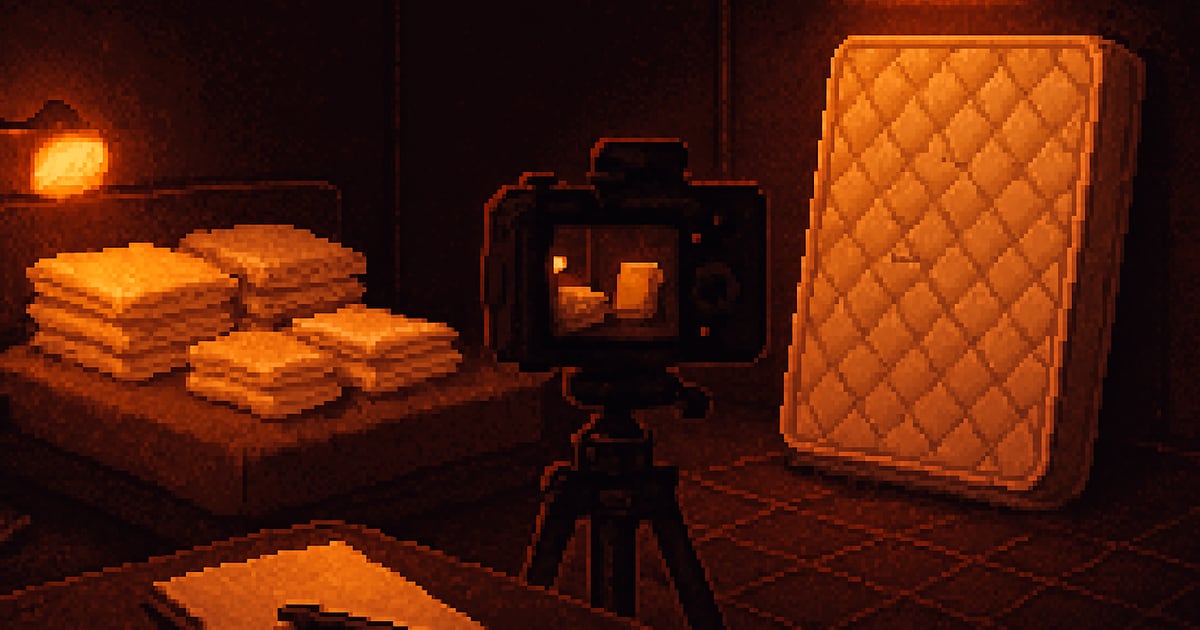
You already know the version where this goes wrong. You shipped one bedding brief to twelve creators. The sheets ads came back usable. The mattress ads came back as four seconds of someone stroking a quilted panel in a dark bedroom. Same brief, same creators, same production quality. The problem was not the creators. It was that you asked a textile and a sleep system to be sold by the same script.
Those are different jobs, so they need different hooks, different shot lists, different claim boundaries, and a different testing cadence. The creator filming your percale set does not need a partner on camera. The creator filming your hybrid absolutely does.
This is the working version: two brief payloads running on one shared spec layer, with the claim rules and usage rights that keep legal and your returns team calm. Everything below assumes you are already testing creative weekly and want the bedding-specific parts. For context on what strong bedding creative looks like in practice, the Brooklinen UGC Ads: Creator Video Teardown Guide shows how a top brand structures its video assets.
Why One Bedding Brief Breaks Both Products
The split is not price. It is the decision unit.
Sheets are a repeat-purchase textile with a short deliberation window and a real rate of color and fit returns. The buyer is asking: will this feel good, will it look like the photo, will it fit my mattress depth, will it pill after washing. Every one of those is answerable on camera in close-up.
A mattress is a one-decision-per-decade purchase with a delivery event attached. The buyer is asking: will I sink, will my partner wake me, will it feel hot, what happens if I hate it, and who carries the old one out. None of those are answerable with a texture shot. They are answered by a person demonstrating a situation.
Here is the failure pattern in practice. A bedding brand with both a sheet line and a boxed hybrid sent a single brief: "film the product in your bedroom, show texture, show yourself getting into bed." The sheets creators delivered tight drape shots, a fold-and-tuck sequence, and a wash-day follow-up. Usable. The mattress creators delivered the same tight fabric shots, now of a quilted mattress cover, plus a wide shot of a made bed. Nothing in the batch addressed firmness, edge support, or the return policy. The brand recut the mattress batch into near-static B-roll behind a voiceover, which is an expensive way to discover you briefed the wrong thing.
The fix was two brief documents with a shared top half. The top half (claims, rights, delivery, aspect ratios, audio rules) never changes. The bottom half (hooks, shot list, demo beats) is product-line specific. You can build both halves quickly with the UGC brief generator and then paste in the demo beats below.
The Sheets Brief: Sensory Proof in Close-Up
The sheets brief exists to make fabric legible on a phone screen, and to set expectations accurately enough that fewer boxes stay unopened in closets.
Hook direction (ask for three, shot as separate takes):
- The swap. Creator pulls old sheets off, holds both fabrics to camera in the same frame, same light. The comparison does the work.
- The objection hook. "I have a 14-inch mattress and every fitted sheet pops off by Wednesday." Then the pocket test.
- The wash-count hook. "These have been through the laundry a bunch of times. Here is the actual current state." Shot in daylight, no filter.
Mandatory shot list:
- Daylight, with white balance locked, so the colorway on screen matches the PDP. Color drift is a returns driver you control for free.
- Drape: fabric falling off the edge of the bed in motion, filmed at a high frame rate so the fall reads smooth.
- Hand-feel: fingers moving across the weave, close enough to see the texture, audio on. The sound of percale versus sateen is a real differentiator and phone mics pick it up.
- Fitted sheet on the corner of the creator's own mattress, with the creator saying their mattress depth out loud.
- Made-bed wide shot, last, not first. It is the least differentiated frame you will get.
- If the line is cooling or seasonal, a touch-test beat filmed as a reaction, not as a claim. The format specifics for seasonal positioning are explored in How Sijo Explains Seasonal Fabric Choice in Bed Ads.
Script beats that work for textiles: state the weave by name, state what it is not ("this is not the crunchy hotel kind"), state the care instruction honestly (wrinkles, if they wrinkle), close on the fit. Creators who hide the wrinkling get a rougher comment section and a worse return rate. Honest creative is cheaper than a reverse-logistics line item.
Claim boundaries, non-negotiable: material and certification claims belong to the brand, not the creator. Thread count, bamboo sourcing, organic certification, and any lab-tested cooling language go into the brief as pre-approved copy. The creator reads it verbatim or does not say it at all. The creator can describe their own sensory experience. The creator cannot upgrade it into a product specification.
The Mattress Brief: Decision Proof Over Texture
The mattress brief has one job: retire the objections that stop a cart from being built, in the order a real buyer hits them.
Beat structure for a 45 to 60 second asset:
- Self-identification, up front. Sleep position, whether they share the bed, what they slept on before. "Side sleeper, share a queen, came off an old innerspring." This is the signal that makes the ad feel addressed to someone.
- Delivery and expansion, real time or clearly time-lapsed. Box in the hallway, cutting the plastic, the mattress expanding. Label the time-lapse on screen. A jump cut from box to perfectly made bed reads as staged and kills the rest of the ad.
- Firmness translation. Not "medium-firm." Instead: creator presses a hand into the surface, lies down, shows the gap at the lower back or the lack of it, and says what it felt like compared to the bed they just described.
- Motion isolation, demonstrated by a human. The wine glass bounce test is recognizable and easy to fake. Ask for a partner or roommate rolling over while the creator stays still in frame, phone locked on a tripod, single take, no cuts. If there is no second person, use a weighted object dropped at a fixed distance and show the full take.
- Edge support. Creator sits on the edge to put on socks. That is the real-life version of the spec.
- Off-gassing honesty. If there is a new-product smell, say how long it lasted. Buyers search for this. Finding it addressed inside your own ad beats finding it in a Reddit thread.
- Trial and returns readout. The creator states the trial window and return mechanics exactly as they appear on your own site, from copy you supply. No paraphrasing, no "I think it's a few months."
Hard exclusions for mattress scripts: no health or medical framing. No "fixed my back pain," no "I sleep through the night now," no sleep-stage or recovery-score claims unless the reading comes from a device the creator shows and the brand has cleared the framing. The Eight Sleep Creator Marketing: A Full Teardown shows how a brand with real sleep-tech data structures those claims carefully to avoid compliance problems.
Logistics the brief must state: who assembles the frame, whether the creator keeps the unit, how an old mattress gets removed, and that filming happens across two sessions (delivery day, then a second session after a stated number of nights). Mattress returns are impractical, so plan to gift the unit and price the usage rights accordingly.
Shared Infrastructure: Shot Lists, Claims, and Usage Rights
The top half of both briefs should be identical, versioned, and boring.
Claim sheet. One page, two columns: approved phrasing and banned phrasing. Include the certifications you actually hold and the exact wording tied to each. Include the words creators cannot use at all. Send it as a separate attachment so it survives when the brief gets forwarded.
Technical spec block. Vertical as the primary ratio, a feed crop as secondary, a resolution floor and a frame rate you name once and never change, white balance locked, raw files delivered alongside the edit. Request the raws every time. Your in-house editor will recut winning mattress footage into new angles without a reshoot.
Usage rights. Separate organic usage from paid media rights and from whitelisting. If you plan to run the asset through the creator's handle as a Meta Partnership Ad, say so in the brief and price it there, not in a renegotiation after the asset performs. Bedding creative tends to have a long useful life because the product does not change seasonally the way apparel does, so buy a term that matches that. Run the number through the UGC rate calculator before you send the offer, and sanity-check the full program against the UGC budget calculator once you know how many mattress units you are gifting.
Sourcing. You need creators who own a bed frame, have daylight in the bedroom, and can get a second person on camera for motion tests. Creators on UGC Roster pitch brands directly, which makes it a practical sourcing channel when you need people who self-select into a bedroom-shoot category rather than waiting to be chased. The category overview for bedding teams sits on the bedding and sleep brand page.
Approvals. Two gates. Gate one is script approval before filming, which is where you catch medical claims and unapproved material language. Gate two is cut approval. Skipping gate one on mattress shoots is how you end up paying full rate for footage legal will not clear.
Testing and Reorder Logic by Product Line
The two lines should not share a testing cadence either.
Sheets: high volume, hook-led. Order in batches, keep the demo body consistent, and vary the opening. Because the consideration window is short, hook rate and click-through move fast enough to read without waiting on a long attribution tail. For current figures, the Hook Rate Benchmarks for Bedding Video Ads gives a baseline across sheet and mattress creative. Reorder from the creators whose hand-feel and drape footage performed, and ask for the same body with new openers rather than a whole new concept. Colorway launches and seasonal weights (percale for summer, flannel for winter) are natural reorder triggers. The same batch logic applies to adjacent textile lines like duvet covers and comforters and pillows, where you can reuse the lighting and color-accuracy spec verbatim.
Mattress: low volume, angle-led. You are testing objections, not hooks. Build one asset per objection: motion transfer, edge support, firmness for side sleepers, delivery and setup, trial and returns. Run them as separate creative, then sequence the survivors into retargeting so a visitor who bounced on the PDP gets the trial-policy asset next. Judge these on down-funnel behavior, not hook rate, and give them a longer read window because the buyer is comparison shopping for weeks. For CPA context, the Good CPA for a Mattress Brand on Meta: Real Benchmarks article breaks down what realistic targets look like.
The returns loop nobody runs. Tag each ad with the angle it carried and ask your CX team to note the stated reason on bedding returns. If the "firmer than I expected" reasons cluster behind a specific creative, that ad is overselling plushness and the brief needs a correction, even if its ROAS looks fine. On a long trial window, a return lands in a later month than the purchase, so an ad can look profitable for a full cycle before it is not. Treat expectation accuracy as a creative KPI.
Creator continuity. For sheets, repeat the same creator so the audience learns the face and you get cheaper production. For mattresses, deliberately vary household composition and sleep position across the roster. The self-identification beat only works if someone in your audience matches it.
Common Mistakes
- Filming the whole mattress ad in warm bedroom lamp light. Creators do it because it looks cozy and matches the bedtime mood. The result is a color-shifted product and a cover that reads yellow. For sheets it is worse, because color mismatch drives returns. Instruct daylight with white balance locked, and allow cozy lamp footage only as a closing beat.
- Reading the spec sheet out loud. Creators default to the brief's bullet points because it feels safe and on-message. "Medium-firm, gel-infused, seven-zone support" lands as an ad read. Ask instead for a translation: what did it feel like compared to the bed they slept on last week, in their own words, with the approved spec language used once at most.
- Treating the box as a throwaway moment. Creators cut from box to made bed because the expansion takes too long for a short-form edit. Buyers specifically want to see how heavy the box is, whether one person can move it, and how long expansion takes. Brief it as a required beat with an on-screen time-lapse label.
- Staging the motion-transfer test badly. A wine glass on a mattress is the recognizable version, and a creator filming it alone with obvious cuts makes the whole ad look fabricated. Require a single unbroken take and a real second person where possible. If the take is faked, you lose the comment section, and the comment section is where mattress buyers do their last check.
- Drifting into health claims. Creators say "this fixed my back" because it is the most emotionally true thing they can say about a new bed. It is also the fastest route to a rejected ad and a regulatory problem. Put the banned phrases in the claim sheet, enforce them at script approval, and give creators an approved alternative that describes comfort without diagnosing anything.
- Upgrading sensory experience into a material claim. A creator who felt cool overnight writes "these are certified cooling." Certification belongs to the brand and its testing, never to the creator's skin. Allow first-person experience language, supply the certified phrasing separately, and review every cut for the swap.
- Mixing competitor bedding into frame. Creators dress the bed with whatever pillows and duvet they already own, often from another brand with recognizable packaging or stitching. Specify what can appear in frame, send the supporting pieces if the shot needs them, and ask for a frame check photo before filming starts. The Coop Home Goods UGC Teardown: Pillow Ads That Convert shows how prop control affects the final result.
- Paraphrasing the trial policy. Creators soften or guess at return terms to avoid sounding promotional. A wrong trial length in an ad is a support ticket and a trust problem. Supply the exact sentence and require it verbatim.
Next Steps
Do this in order.
First, split your existing bedding brief into two documents today. Keep the shared top half (specs, claims, rights, delivery) and write two bottom halves using the beat structures above. That alone fixes most of the recut work you are doing in-house.
Second, write the claim sheet before you commission anything else. One page, approved column and banned column, with your actual certifications and your exact trial-policy sentence. Attach it to every brief and enforce it at script approval, not at cut approval.
Third, commission a small sheets batch and a single mattress asset in the same week. The sheets batch teaches you which hooks travel. The mattress asset teaches you whether your logistics instructions (frame assembly, old-mattress removal, two-session filming) are realistic before you gift a full batch of units.
Fourth, tag every ad with the objection it carries and ask CX to log stated return reasons against those tags. On a long trial window, that loop is the only honest read on whether your creative is setting expectations or borrowing against them.
The decision to make now is which product line you fix first. If mattress footage is what keeps getting recut, write that bottom half before you order another sheets batch. When you are ready to source against the two briefs you just wrote, source vetted UGC creators on UGC Roster and state the bedroom and second-person requirements in the pitch.
FAQ
What is a bedding UGC brief?
A bedding UGC brief is the document that tells a creator exactly what to film, what they are allowed to say, and what you get the rights to use afterward. For bedding it has two halves: a fixed half (claim boundaries, disclosure wording, aspect ratios, audio rules, delivery deadline, usage rights window) and a product-line half (hooks, shot list, demo beats). The product-line half is where sheets and mattresses split. A sheets brief might say "film the fitted corner stretching over a 14-inch mattress, no cuts". A mattress brief says "film your partner getting in while a glass of water sits on your side". Same wrapper, different payload.
What should a bedding UGC shoot list include?
Include the shots nobody thinks to ask for: the packaging opening, the first touch, the fitted corner going on, and a follow-up clip filmed after a wash cycle. Add an audio note too, because bedding footage lives or dies on sound. Sheet rustle recorded on a phone mic sounds like static. Ask for a lavalier or a voiceover recorded separately. Then specify the unglamorous frames: the care label, the tag showing depth in inches, the stitched edge. Those become your objection-handling cutaways later. Finally, request one clean take with no talking at all, so your editor can build a voiceover variant without a reshoot.
How to find UGC creators who can film a bedroom properly?
Screen on the room, not the reel. Ask every applicant for one short unedited clip of their actual bedroom in daytime, before you book anyone. You are checking for a window, wall color that is not beige-on-beige, and enough floor space to put a camera at the foot of the bed. A creator with a perfect portfolio and a windowless basement room will hand you dark footage every time. For mattress work, add a second filter: do they have a partner, roommate, or friend who will appear on camera. UGC Roster's brand side sources vetted creators for ad creative, and creators there pitch brands directly, so you can state the bedroom requirement up front and let it self-select.
What cooling claims can a creator make about sheets on camera?
Keep creators in the lane of personal experience and keep performance language in your own ad copy where legal has signed it off. "I run hot and I stopped waking up sweating" is a creator describing their night. "These sheets lower your body temperature" is a product performance claim, and if it is not backed by testing you own, it should never leave a creator's mouth. Put an approved phrase list and a banned phrase list directly in the brief rather than hoping for good judgment. Also require the paid partnership disclosure on-screen and in the caption, not buried in a hashtag block at the end.
Which UGC formats sell mattresses and bedding best?
Different formats carry different jobs, so run them as separate concepts rather than one hybrid video. For sheets, the formats teams reach for are the tactile close-up with voiceover, the wash-day update filmed later, and the swap sequence where old sheets come off and the new set goes on. For mattresses, the recurring winners in review are situational: the two-person motion test, the delivery-day timelapse from box to made bed, and the talking-head that answers one objection per video (firmness, edge support, trial return). Treat the objection talking-head as a series. One video per objection beats one video that rushes through four.
Do you send bedding creators the product to keep?
For sheets, yes. A used textile does not go back into sellable inventory, and nobody wants it back. Write "product is yours to keep" into the brief so the creator does not ask. For mattresses, keeping it is usually the only sane logistics answer too, because a boxed hybrid does not go back in the box. Two things to settle in the contract first: how long your usage rights run, and whether the creator can resell or re-review the unit for a competitor during that window. Also agree who removes their old mattress, because that is a real cost you may be inheriting. Lock it in the contract, not in a DM.
How many ad concepts should a bedding brand test at once?
Test fewer concepts with wider separation between them rather than many near-identical variants. Three videos that all open on a drape shot are one concept with three hooks, not three concepts. A real spread looks like this: one tactile sensory video, one objection talking-head, one situational demo with a second person on camera. Let each one run long enough to clear the learning phase at your own budget level before you judge it, then cut the loser and replace the slot rather than reshuffling everything. Keep hooks as a separate variable. Once a concept works, cheap hook swaps extend its life without another creator booking.